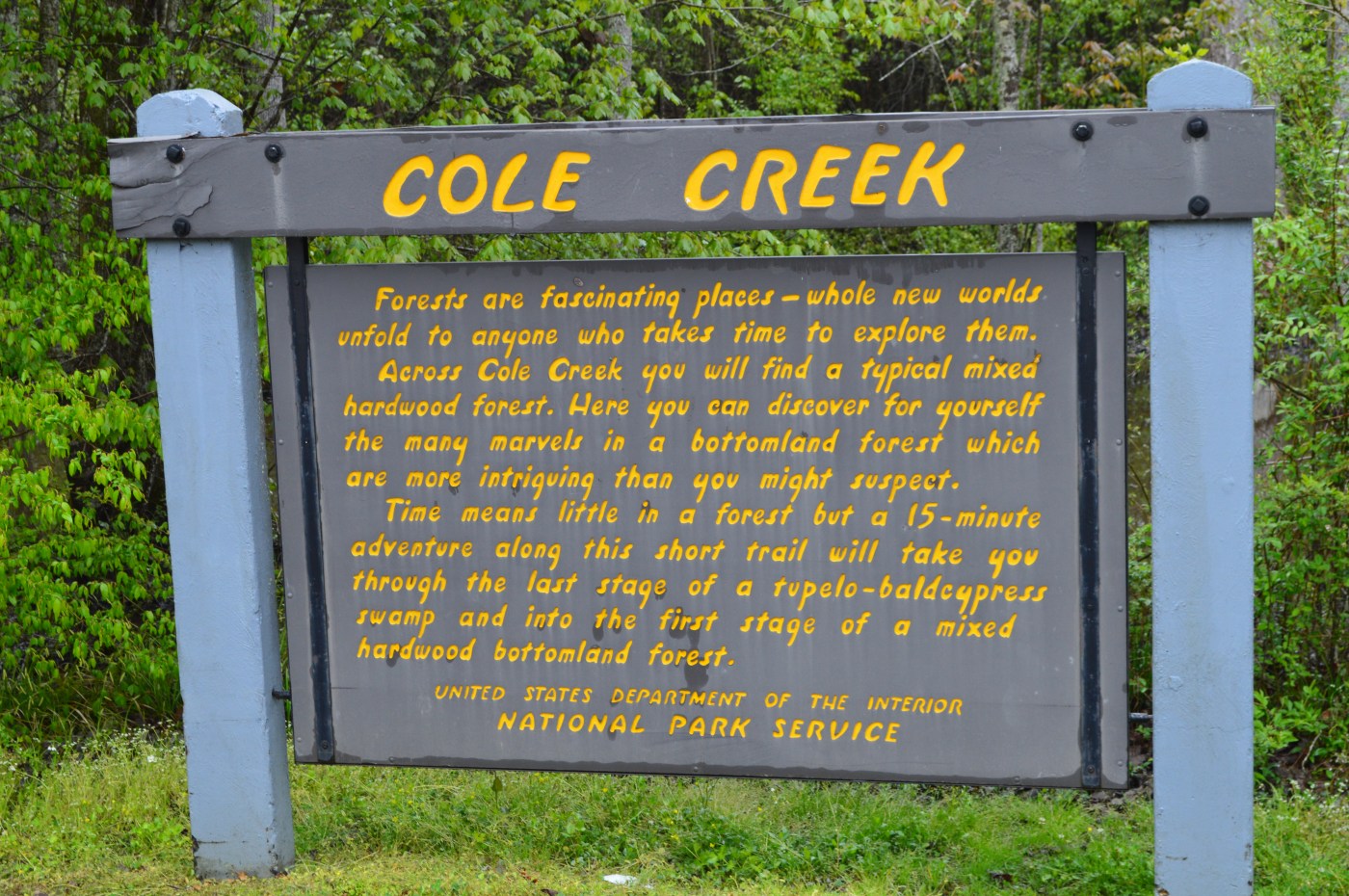
Date Visited: 4/4/2019
We had now driven 175 miles north on the Natchez Trace Parkway and seen some pretty cool things and as well as walked some beautiful little interpretive trails, but our next stop ended up being our favorite little nature trail of them all.
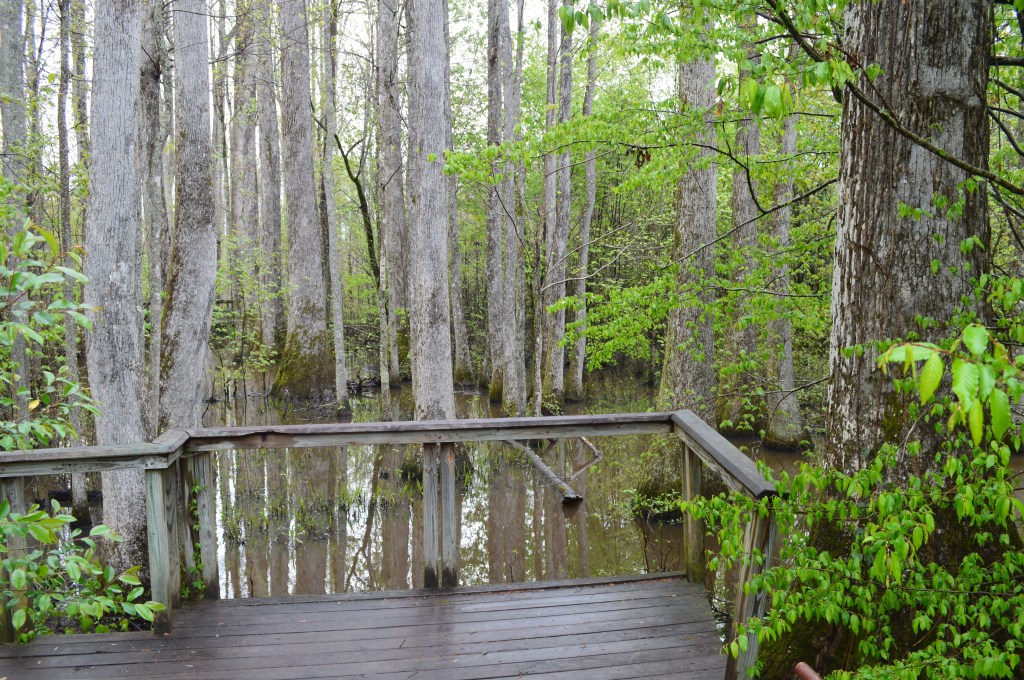
During our stop at MP 122 we learned about the nature of a swamp and the Bald Cypress. On this stop we learn of another water dwelling tree call the Water Tupelo and witness the slow transition of a swamp to a bottomland mixed hardwood forest.
The Water Tupelo is another long-lived tree that can continue to thrive when its root system is completely submerged. They are recognizable by the wide swollen base (buttress) that supports the tree. The word “tupelo” is transliterated from the Creek name “ito opilwa,” which literally means “tree and swamp.”
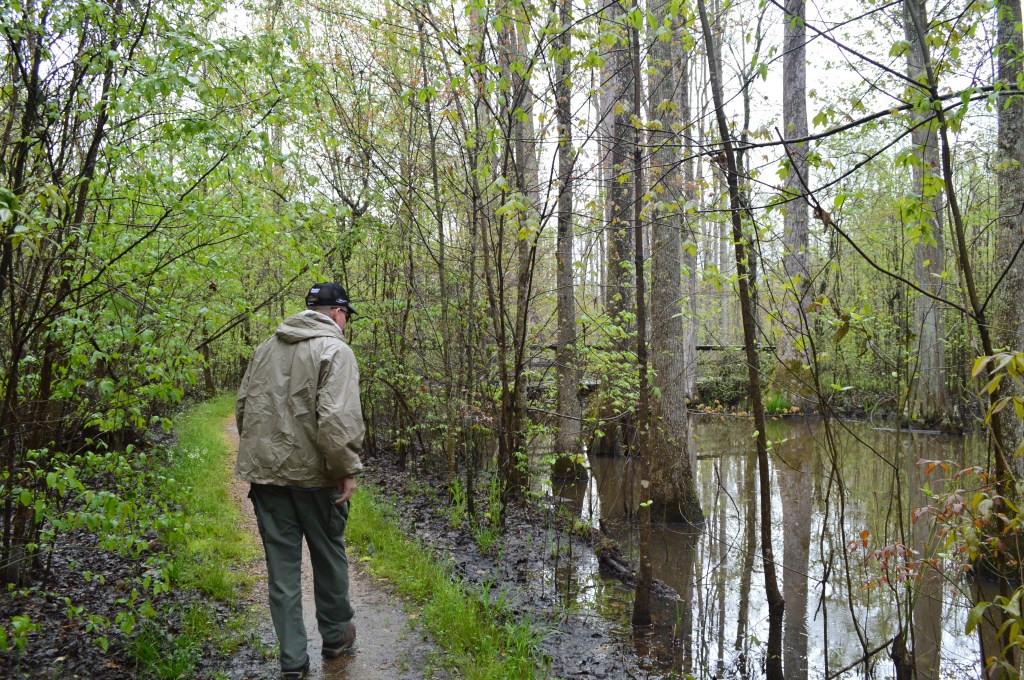
As these trees die and eventually fall, forest insects, their larvae and fungi begin the work of aerobic decomposition and decay. Other microorganisms add to the process by anaerobic fermentation and the end result is how the soil reclaims the tree adding to the layer of humus on the forest floor. The humus is a vital ingredient to a healthy forest providing both moisture retention and important nutrients for the next generation of trees and plants.
As this cycle continues, soil levels increase and so does the slow transition from swamp to hardwood forest.
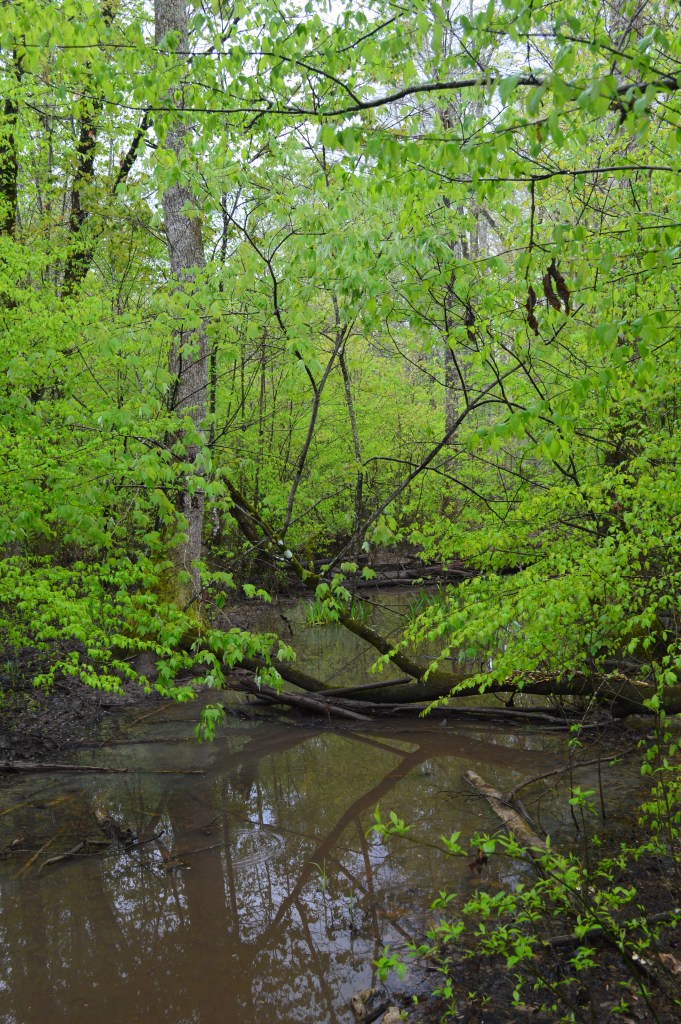
Flooding also aids the process. During times of flood, Cole Creek carries with it soil from other areas. As the banks overflow soils are deposited into these low lying swampy areas which also increases soil levels.
Red Maples become more prevalent as the soil levels increase and the waters begin to transition from the high saturation of the swamp to a more marshy composition. These trees, known as transition trees, can sprout and grow in these marshy soils and continue to survive as the soil becomes drier.
As the forest fills with more hardwood varieties and vegetation the swamp will eventually disappear. The waters of Cole Creek will become confined to the banks of the river and the transition from swamp to hardwood forest is complete.

This beautiful little trail only takes about 15 minutes to complete, but it was fascinating. Other reviewers have stated that it was like walking through time and I have to agree. Thanks to the interpretive markers along the trail you can actually witness the transition of swamp to forest. This process takes hundreds of years, so in essence it really was a trip through time.
Until next week…
Who we are, What we do, How we got started and How you can help
If you are new here and you would enjoy hearing about our journeys and learning along with us, please consider subscribing and if you want to know how it all began read our first post.
As always, if you want to help support this site please like, click, share, all that stuff! Or, you can make a donation or buy merchandise HERE. Donations will be acknowledged publicly the following week, so if you wish to remain anonymous please let us know.


When you click other links on our website and make purchases we may earn a small commission. However, this does not impact our reviews and comparisons. By using the links on this website you help to support us without any additional cost to you.


 FREE THE MCGEES